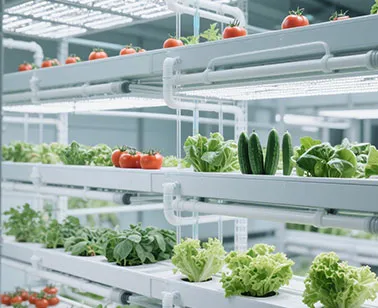
Building an NFT hydroponic system means creating a recirculating setup where a thin film of nutrient solution flows through grow channels and feeds plant roots without soil. NFT, or Nutrient Film Technique, is widely used for lettuce, basil, spinach and other leafy crops because it can deliver water, oxygen and nutrients efficiently in a controlled growing environment.
For commercial growers, the key is not simply connecting pipes and a pump. A reliable NFT system needs correct channel layout, stable water flow, proper slope, clean filtration, nutrient monitoring and easy maintenance. JY provides NFT Hydroponic System Supplies, Hydroponic Supplies and PVC Hydroponic System Pipes for greenhouse, commercial and home-growing projects.
What Is an NFT Hydroponic System?
An NFT hydroponic system is a soilless growing system where plant roots sit in shallow channels and receive a continuous thin stream of nutrient solution. The solution flows from a reservoir through grow channels, passes over the roots, and returns to the tank for recirculation.
Because hydroponics replaces soil with water-based nutrient delivery, growers must understand how essential plant nutrients are supplied through hydroponic solutions. In NFT systems, this is especially important because roots are exposed to a moving nutrient film rather than a deep water reservoir or growing bed.
NFT is best suited for lightweight crops. Lettuce, basil, spinach and salad greens are common choices because they grow quickly, have relatively compact root systems and are easy to harvest from channels. Larger fruiting crops may be better suited to Dutch bucket, drip or DWC systems because heavy roots can block NFT channels and disrupt flow.
Materials Needed to Build an NFT Hydroponic System
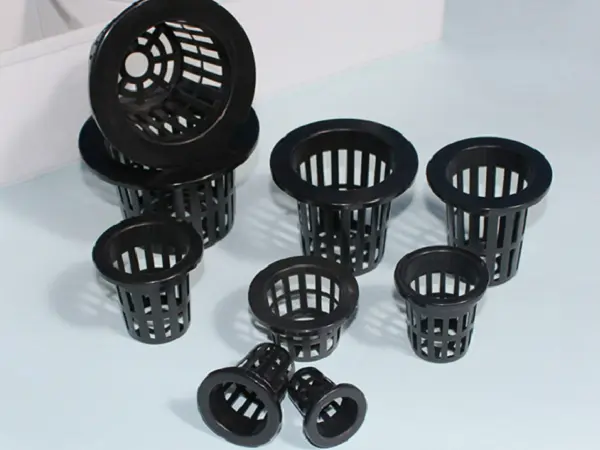
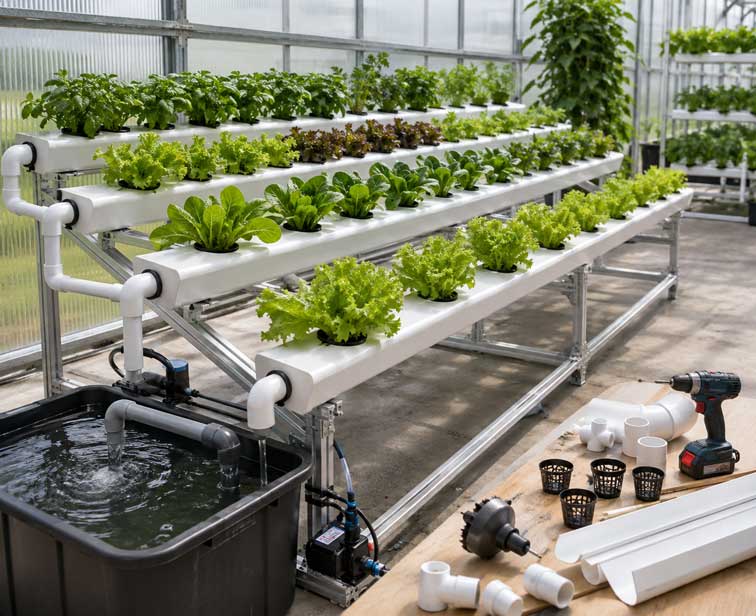
An NFT hydroponic system requires grow channels, a reservoir, pump, tubing, net cups, growing media, nutrients and monitoring tools. Each part affects water flow, root oxygen, plant support and daily management.
| Component | Function | Buying Tip |
| NFT Channels / Pipes | Hold plants and guide nutrient flow | Choose food-safe, UV-resistant channels for greenhouse use |
| Reservoir Tank | Stores nutrient solution | Size it for stable EC, pH and temperature |
| Water Pump | Circulates nutrient solution | Select continuous-duty pump with enough flow |
| Tubing and Fittings | Connect pump, channels and return line | Use leak-resistant fittings and simple layout |
| Net Cups | Support seedlings in channels | Match cup size to channel hole diameter |
| Growing Media | Holds seedlings in place | Rockwool, foam cubes or plugs are common |
| Timer / Controller | Controls pump or automation | Continuous flow is common; backup power is useful |
| pH / EC Meter | Measures nutrient strength and acidity | Essential for commercial growing |
JY’s small NFT hydroponic system includes NFT pipes, hose, nutrient pump, foam cubes, net cups and a mechanical timer, giving buyers a practical reference for starter system configuration.
Step-by-Step: How to Build an NFT Hydroponic System
Building an NFT system means assembling a gentle-flow recirculating path from reservoir to channel and back to reservoir. The goal is to keep a shallow nutrient film moving evenly across the roots without flooding them.
First, plan the layout. Decide how many channels you need, the channel length, plant spacing and bench height. Lettuce and herbs are commonly spaced around 15–25 cm apart depending on variety and harvest size. Leave enough space for inspection, cleaning and harvesting.
Second, install the reservoir at the lowest point of the system. Place the pump inside the reservoir and connect it to the supply tubing. The tubing should feed the higher end of each NFT channel.
Third, set the channels on a slight slope so nutrient solution can flow back by gravity. A practical NFT layout should create a thin, steady stream rather than standing water. Growers can compare their layout with Virginia Tech’s explanation of NFT system design and management, which emphasizes water quality monitoring and nutrient management for NFT production.
Fourth, drill or use pre-made planting holes, insert net cups, and transplant healthy seedlings once roots are long enough to reach the nutrient film. Avoid weak seedlings because NFT depends on fast root contact with flowing solution.
Fifth, connect the return line back to the reservoir and run a leak test. Check every joint, end cap and return pipe before adding plants. After that, add hydroponic nutrients, adjust pH and EC, and start monitoring daily. For lettuce production, growers can use UF/IFAS lettuce hydroponic pH and EC recommendations as a useful reference; it suggests EC around 1.4–1.8 mS/cm and pH around 6.0–7.0.
NFT vs DWC vs Ebb and Flow: Which System Should You Build?
NFT, DWC and ebb-and-flow systems differ in root environment, water movement, crop fit and management difficulty. NFT is efficient for leafy greens, DWC is simple for root oxygen and water buffering, and ebb-and-flow is flexible for trays and media-based growing.
| System Type | Best Crops | Main Advantage | Main Risk |
| NFT System | Lettuce, basil, herbs, salad greens | Efficient nutrient delivery and easy harvesting | Pump failure can dry roots quickly |
| DWC System | Lettuce, leafy vegetables, herbs | Stable water volume and root oxygen with aeration | Water temperature and oxygen must be managed |
| Ebb and Flow | Seedlings, potted herbs, nursery crops | Flexible crop spacing and media use | Timer and drainage issues can affect roots |
| Dutch Bucket | Tomatoes, cucumbers, peppers | Better support for larger plants | More media and drip management needed |
Choose NFT when the goal is clean, repeatable production of leafy greens. Choose DWC when you want more water buffering. Choose ebb and flow when you need crop flexibility and media support. For commercial greenhouse projects, many growers combine systems rather than relying on one method for every crop.
Common Mistakes When Building an NFT Hydroponic System
Common NFT hydroponic mistakes include poor channel slope, weak pump sizing, no filtration, unstable pH, blocked channels, warm nutrient solution and lack of backup planning. These problems can quickly reduce plant growth because NFT roots depend on continuous flow.
Do not build channels too flat, or solution may stagnate. Do not make flow too deep, or roots may lose oxygen. Do not ignore cleaning, because algae, root debris and mineral deposits can block pipes. For commercial projects, buyers should also consider spare pumps, filtration, shade control, grow-table height, pipe cleaning access and after-sales support.
JY provides NFT system components, installation instructions and online after-sales service for growers who need complete supply support.
Conclusion
Building an NFT hydroponic system requires a reservoir, pump, channels, tubing, net cups, seedlings, nutrients and reliable monitoring. The system works best when a thin, continuous nutrient film flows evenly through channels and returns to the reservoir without leakage or blockage.
For lettuce, herbs and leafy vegetables, NFT can be an efficient and space-saving growing method. For larger crops, growers may compare NFT with DWC, ebb-and-flow or Dutch bucket systems before investing. JY supports growers with NFT hydroponic system supplies, hydroponic pipes and full hydroponic supply options for greenhouse, commercial and home-growing projects.
FAQ About Building an NFT Hydroponic System
1. What does NFT mean in hydroponics?
NFT means Nutrient Film Technique. It is a hydroponic method where a thin film of nutrient solution flows through channels and feeds plant roots.
2. What crops grow best in an NFT system?
NFT is best for lettuce, basil, herbs, spinach and other lightweight leafy greens. It is not ideal for heavy fruiting crops with large root systems.
3. Do NFT hydroponic systems need a pump?
Yes. NFT systems need a pump to circulate nutrient solution from the reservoir to the grow channels and back again.
4. What pH and EC should I use for NFT lettuce?
For lettuce, a practical reference range is EC around 1.4–1.8 mS/cm and pH around 6.0–7.0, but growers should adjust based on crop stage, water quality and local conditions.
5. What happens if the NFT pump stops?
If the pump stops, roots can dry quickly because NFT channels hold only a thin nutrient film. A backup pump or power backup is recommended for commercial systems.
6. Why choose JY for NFT hydroponic systems?
JY Grow Supply provides NFT hydroponic system supplies, hydroponic pipes, grow channels, accessories and hydroponic supply support for greenhouse, commercial and home-growing projects.

 English