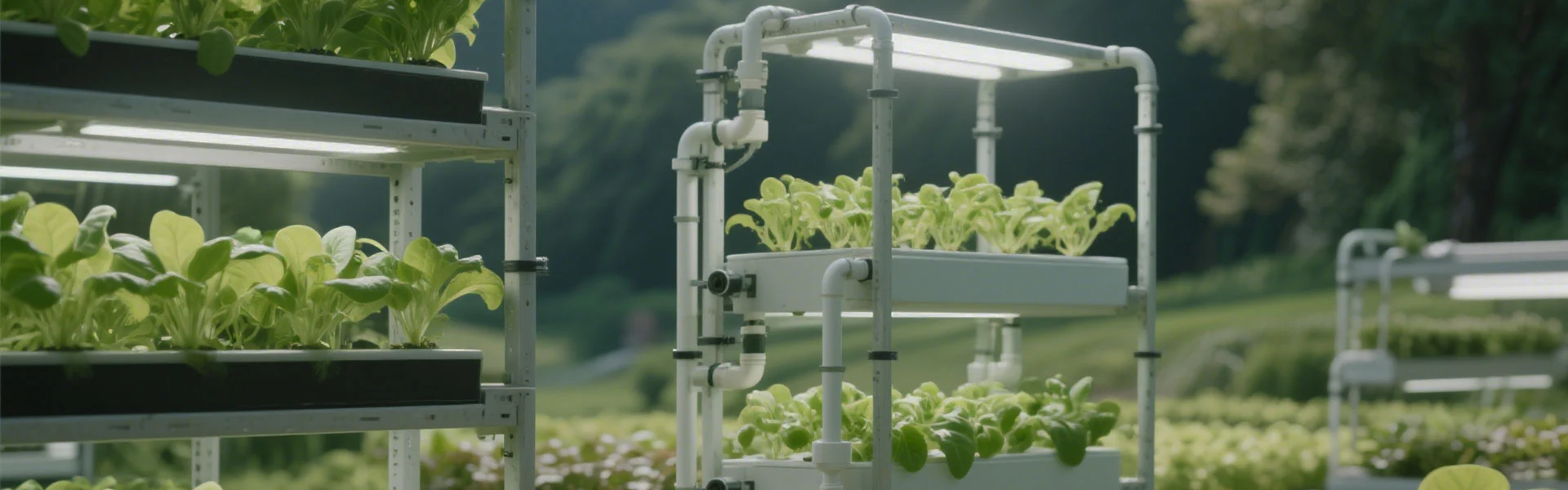
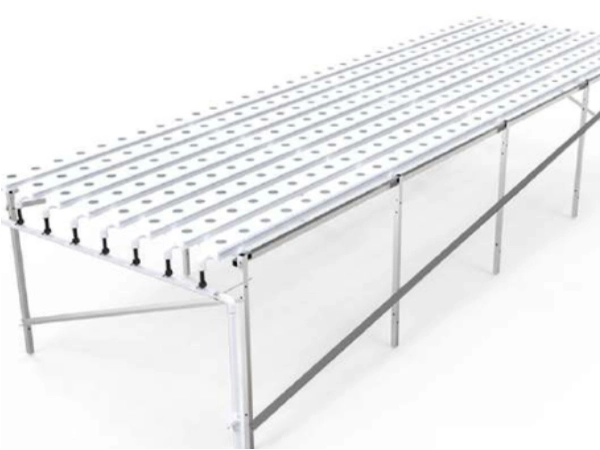
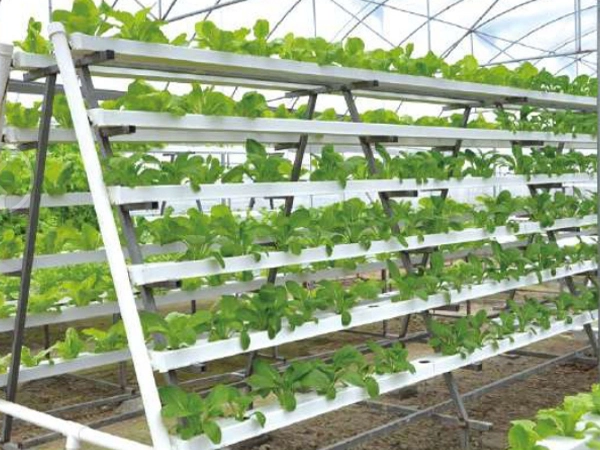
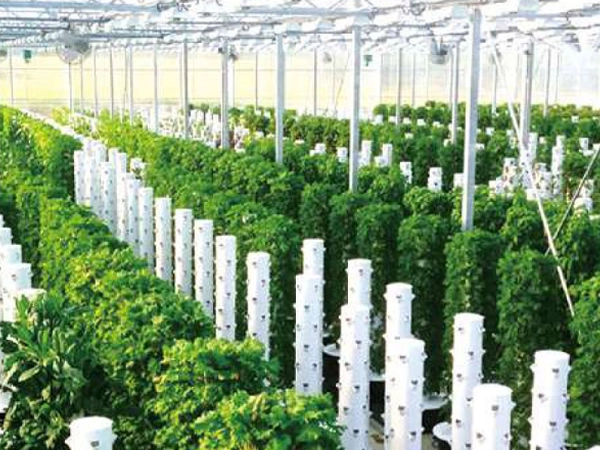
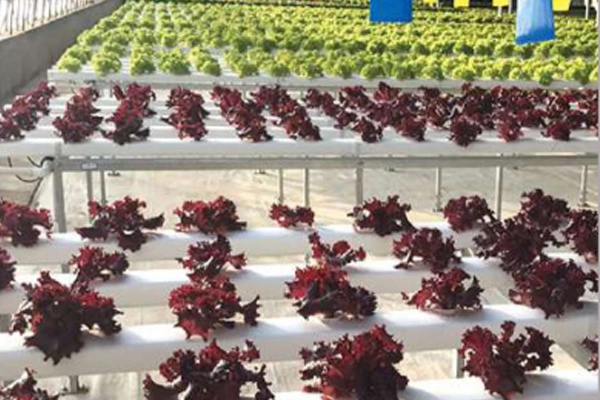
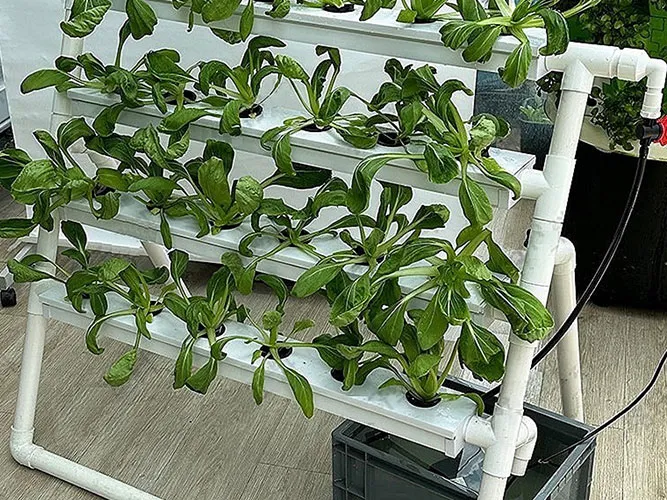
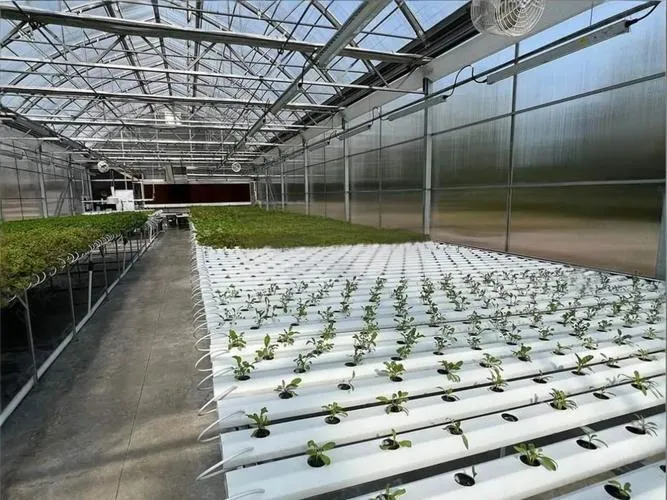
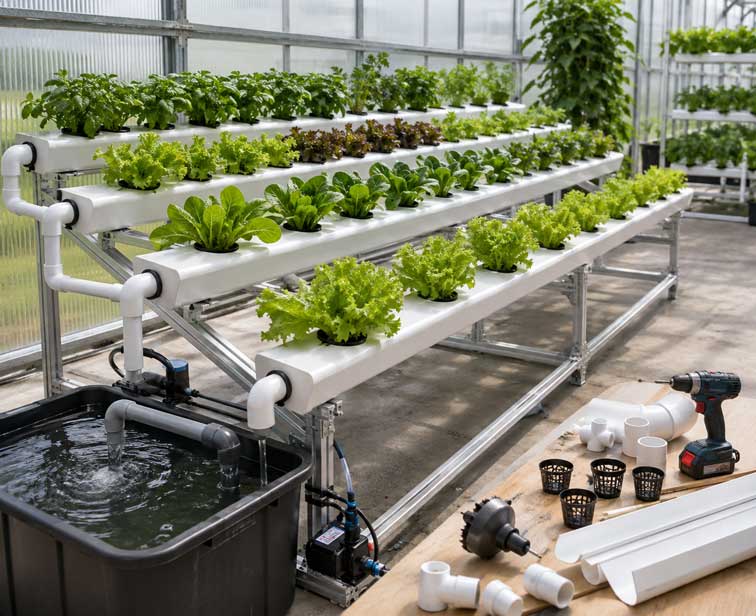
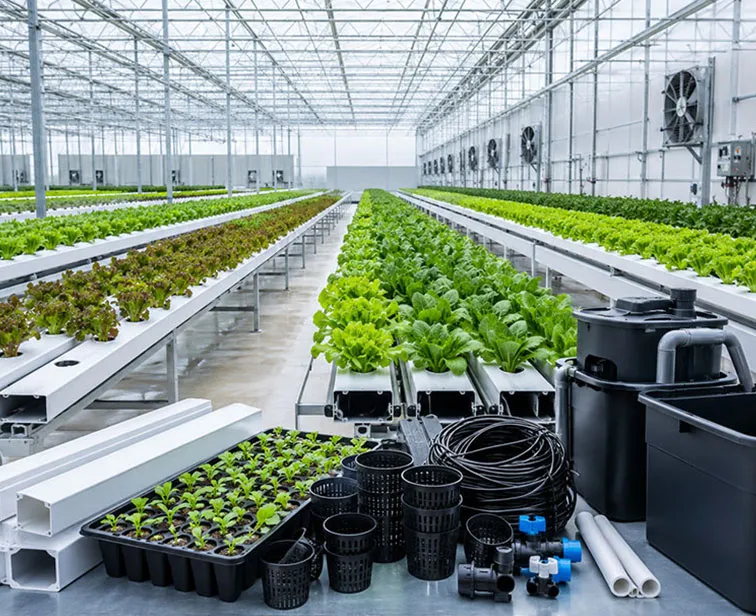
NFT hydroponic system is pipeline cultivation, this is a form of soilless culture, mainly based on hydroponic leaf vegetables. The vegetables produced in this NFT hydroponic system are clean, pollution-free, and can be picked and eaten directly.
The pipeline cultivation includes table type NFT hydroponic system, vertical hydroponic system, zipper pipeline hydroponic system, widely used in hydroponic supplies China for greenhouse vegetable production.
The NFT (Nutrient Film Technique) hydroponic system has significant advantages over traditional soil cultivation in many aspects.
NFT is effective in saving water and fertilizer. The NFT system recycles nutrient solutions in a closed loop, using only 1/5 to 1/3 of the water used in traditional soil cultivation, and the reuse rate of the nutrient solution can reach over 95%.
The NFT hydroponic system has high space utilization, supporting multi-layer vertical planting (such as A-frame racks and vertical towers), increasing planting density per unit area by 2–3 times.
NFT hydroponics allows dynamic adjustment of the nutrient solution formula according to the growth stage of the crops, improving the vitamin C content of tomatoes and providing better mineral content in spinach.
NFT hydroponic crops have better appearance and taste, leaves are uniform in size and color, and leafy vegetables like lettuce have a sweeter and crisper taste.
NFT hydroponics has higher safety, as soil-free cultivation prevents heavy metal contamination and pesticide residues, meeting green food standards.
NFT hydroponics cuts off soil-borne disease pathways, enhances pest and disease control in a soilless environment, and reduces pesticide dependence.
NFT hydroponics offers stable and predictable yields. Light, temperature, humidity, and nutrient solution parameters can be accurately controlled, reducing the impact of climate fluctuations.
NFT hydroponic growth cycles are shorter, and yield per unit area is higher.
NFT hydroponics also has environmental and sustainability advantages, reducing pollution, eliminating herbicide use, and consuming only 10% of the water compared to traditional agriculture.
It is adaptable to extreme environments, supporting applications in deserts, rooftops, and ocean vessels.
Carbon emissions are significantly lower than traditional cultivation.
NFT hydroponics has a high degree of automation, integrating pH/EC sensors and IoT devices, allowing remote monitoring and control via a mobile app.
In summary, the NFT hydroponic system, through precise environmental control, resource recycling, and soilless cultivation, achieves high efficiency, enhanced quality, and green agriculture, making it particularly suitable for urban agriculture, plant factories, and areas with limited resources.
Hydroponic System | NFT Hydroponic | Ebb and Flow Hydroponic | DWC Hydroponic | Aeroponic Hydroponic |
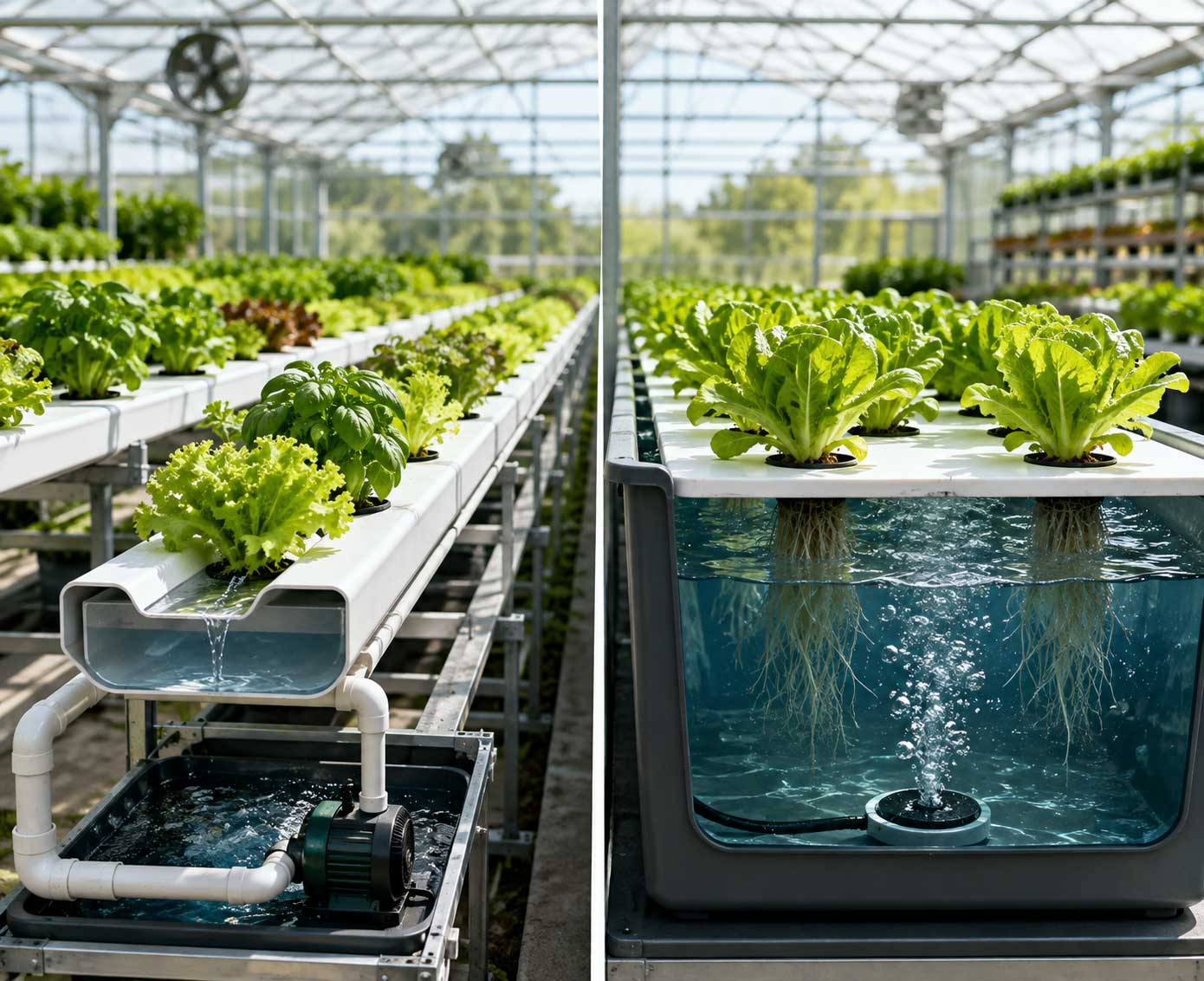
Working Principle | The plant roots are placed in inclined planting pipes, and the nutrient liquid flows continuously as a film 1–2 cm thick. Some roots are immersed in the liquid film to absorb water and nutrients, while others are exposed to humid air to obtain oxygen. | Periodically flood the root through a timer and water pump (simulating tides), then return it to the reservoir, achieving nutrient and oxygen supply. | The plant roots are fully immersed in oxygenated nutrient solution, with oxygen continuously supplied through an air pump. | The plant roots are suspended in the air, and the nutrient solution is regularly atomized and sprayed directly onto the roots through a misting device. |
Performance Features | *Energy-saving, material-saving, high automation; *Requires stable power supply. | *The frequency of flooding and drainage can be controlled through siphon or water pump. *DIY is flexible, but attention to preventing algae and root rot | *The structure of DWC is simple, suitable for beginners. *The liquid layer is relatively deep (usually >5 cm) and has a strong buffering capacity | *With the most abundant oxygen supply, the growth rate is the fastest; *The utilization rate of water resources and fertilizers is extremely high; *The technology is complex and the cost is high |
Suitable Crops | suitable for leafy vegetables (such as lettuce and spinach); | It is suitable for a wide range of plant types (vegetables, foliage plants, orchids, etc.) | Primarily used for leafy vegetables and herbaceous plants; | All types (especially high-value crops) |
Advantages | *Low facility investment and lightweight structure. *Sufficient oxygen supply to the root system; *It can be produced annually with high yield. | *Simulate natural environment, with roots alternately exposed to water and air. *Suitable for plants with long roots or requiring high humidity (such as Phalaenopsis). *The system can be extended in a modular manner | *Simple maintenance and low cost; The root system directly contacts nutrients and grows rapidly. *With a large liquid volume, it exhibits good tolerance to temperature and concentration fluctuations | *High yield, water and fertilizer saving. *No risk of pathogen transmission (non-circulatory system). *Suitable for regions with limited space or water resources |
Disadvantage | *Power outages or pump malfunctions are prone to cause wilting. *Closed circulation systems are prone to disease transmission. *High requirements for management skills | *The complexity of the equipment is higher than that of DWC; *Poor drainage can easily lead to root rot. *When used outdoors, it evaporates quickly and requires frequent replenishment | *Relying on continuous oxygen supply, there is a risk of root rot during power outages; *Outdoors, it is susceptible to high temperatures and algae pollution. *Plants that require a lot of air for their root system (such as fruit trees and tuberous plants) are not suitable | *The spray head is prone to clogging and requires high-quality water filtration; *Rely on stable power supply and precise control; *Large initial investment and high maintenance requirements |
The main components of the NFT (Nutrient Film Technique) hydroponic system :
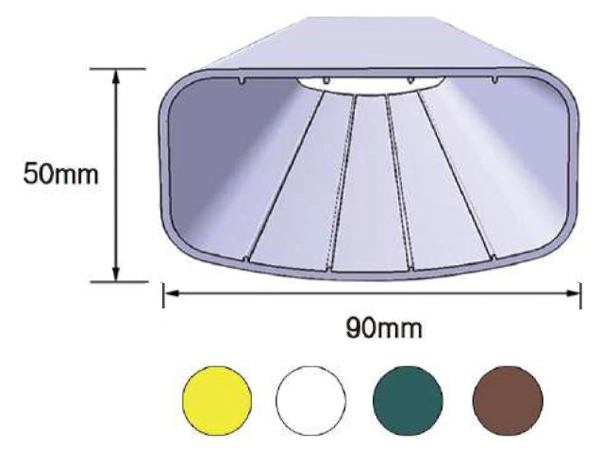
1. The planting trough is usually made of food-grade PVC, with a 1–3° slope at the bottom to ensure uniform flow of nutrient solution, it is commonly 2–3 meters in length and 0.3–0.5 meters in width
2. The nutrient solution tank is used for storing and preparing nutrient solution. For small households, it can be 50–100 liters, while for commercial scale, it can reach hundreds to thousands of liters.
3. The water pump drives the circulation of nutrient solution, with a flow rate generally ranging from 10 to 50 liters per hour.
4. The pipeline needs to be resistant to acid and alkali, and should be made of PVC or PE material
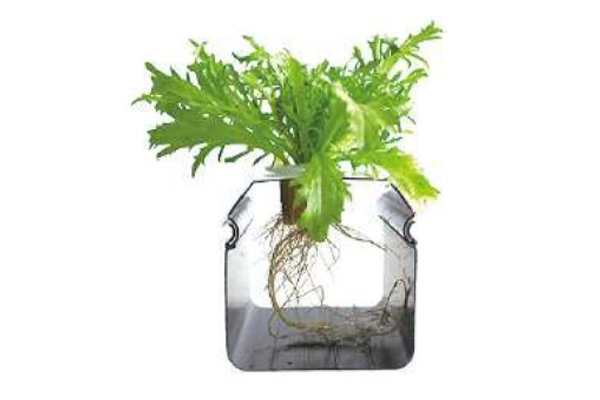
5. The planting system including planting trough with cover and planting basket pots, is used to fix seedlings, with the roots hanging down to contact the nutrient solution
6. As the recirculation structure, a recirculation port is set at the end of the planting trough to allow the nutrient solution to return to the storage tank, forming a closed loop
1. Choose a space with sufficient lighting (or the ability to supplement light) and good ventilation (such as a greenhouse or balcony)
2. Determine the system layout (flat laying, A-frame, or multi-layered vertical) based on the planting scale
3. Build supports brackets and planting trough
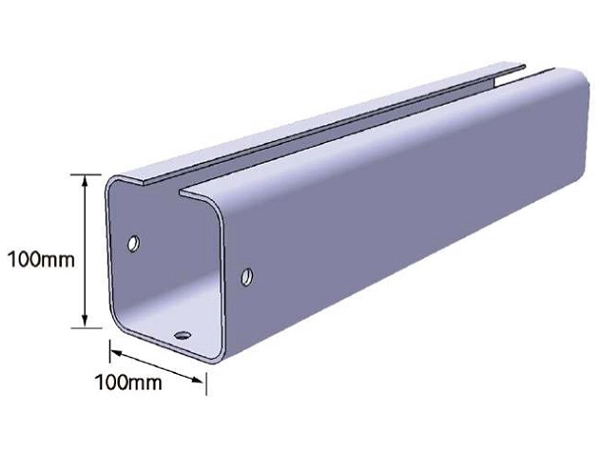
* Install load-bearing supports (such as galvanized square steel) to ensure stability; if it is a multi-layer structure, an independent foundation is required to prevent settlement
* Lay out the planting troughs, ensuring a 1–3° slope at the bottom to facilitate the flow of nutrient solution by gravity
* Non-woven fabric can be laid inside the troughs to improve water absorption and ventilation
4. Connect the circulatory system
Place the water pump in the nutrient solution tank and connect the water outlet pipe to the high end of the planting trough.
The lower end of the planting trough is equipped with a return pipe connected to the nutrient solution pool, ensuring no leakage and no air blockage
5. The pipeline must remain sealed throughout its entire length to prevent algae growth or contamination
6. Install auxiliary equipment (optional but recommended)
* Water quality monitoring involves the use of pH and EC meters to monitor the condition of nutrient solutions
* Disinfection equipment, such as medium-pressure ultraviolet (UV) devices, can be installed at the end of the return pipe to kill pathogens, degrade residual chlorine, and remove algal toxins
* Intelligent control, supporting PLC automatic adjustment of flow and lighting
* System testing: After filling with water, turn on the water pump and observe whether the nutrient solution evenly covers the bottom of the tank, forming a "thin film" (with a thickness of about 1-2 cm),
Check whether the backflow is smooth, and confirm that there is no water accumulation or dry area.

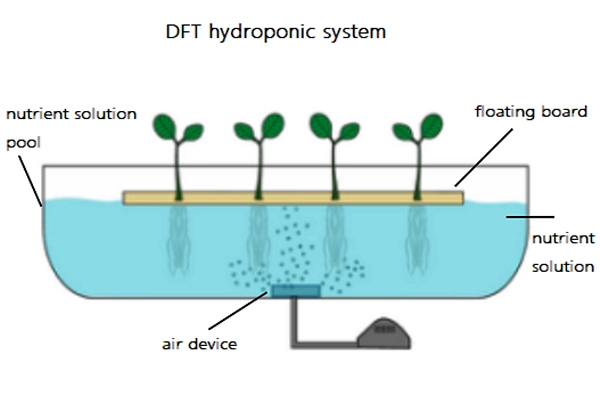
NFT (Nutrient Film Technique) hydroponic system uses a thin, continuous nutrient solution flow, while DFT (Deep Flow Technique) hydroponic system maintains a deeper nutrient reservoir for plant roots.
NFT hydroponic system provides higher oxygen levels as roots are exposed to air, whereas DFT relies on aeration systems to oxygenate the deeper water.
NFT hydroponic system is ideal for lightweight plants like leafy greens, while DFT hydroponic system supports heavier plants due to its stable root anchoring and larger water volume.
China Jy Resource Co., Ltd.
Phone
Address
The 1st floor of building no.1032, 999 Wangqiao Road, Pudong, Shanghai, China