Establishment of Dutch Bucket System:
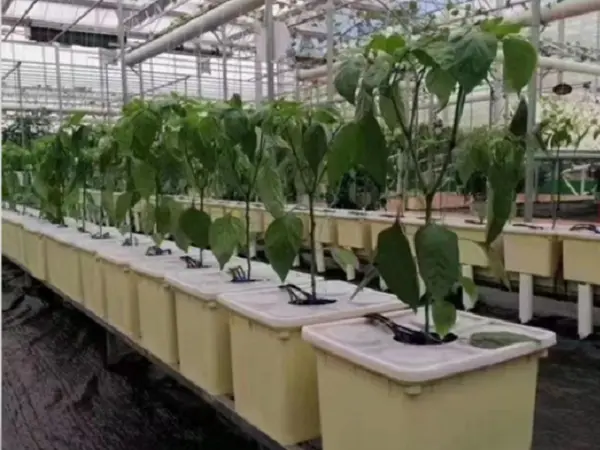
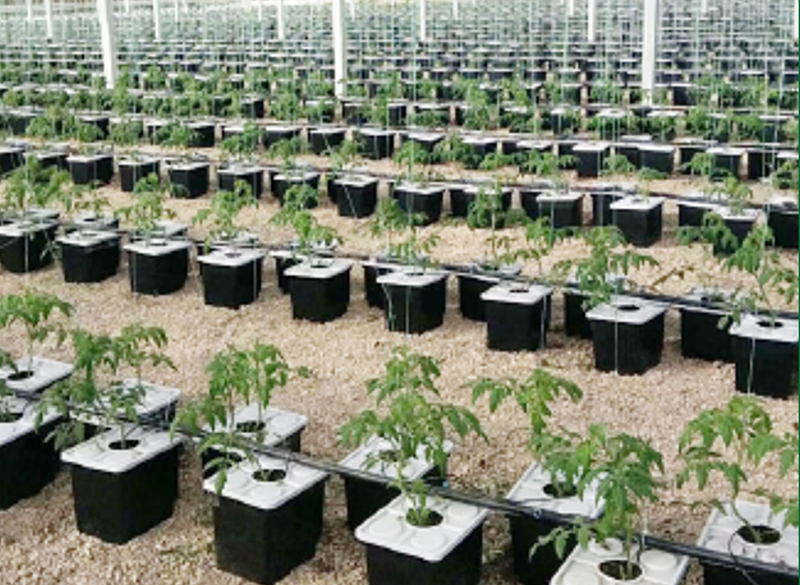
The primary job when using Dutch buckets for hydroponic tomato cultivation is to build a stable and suitable system. Choose sturdy and moderately sized Dutch buckets as planting containers, ensuring that they have drainage holes at the bottom to maintain good breathability of the plant roots. Next, configure a drip irrigation system that acts as a precise nutritionist for plants, providing even and continuous nutrient supply.
Dutch Backets Cultivation Substrate:
To select the substrate, it is recommended to use perlite, coconut coir or rock wool, which can both moisturize and provide necessary breathability, creating a comfortable growth environment for roots. In addition, maintaining environmental hygiene is equally crucial. It is necessary to regularly inspect and remove plants with poor growth to ensure the overall health of the planting environment. When tomatoes gradually mature, turn from green to red, and have a moderate texture, it is the harvest season.
Advantages of Dutch Bucket Cultivation:
The overall effect of Dutch bucket cultivation is beautiful, easy to transport, and can be connected into strips or sorted regularly. When a single vegetable plant is infected, the cultivation box and the plant can be replaced together without infecting other plants.
Suitable Cultivation: tomatoes, cucumber, etc.

 English