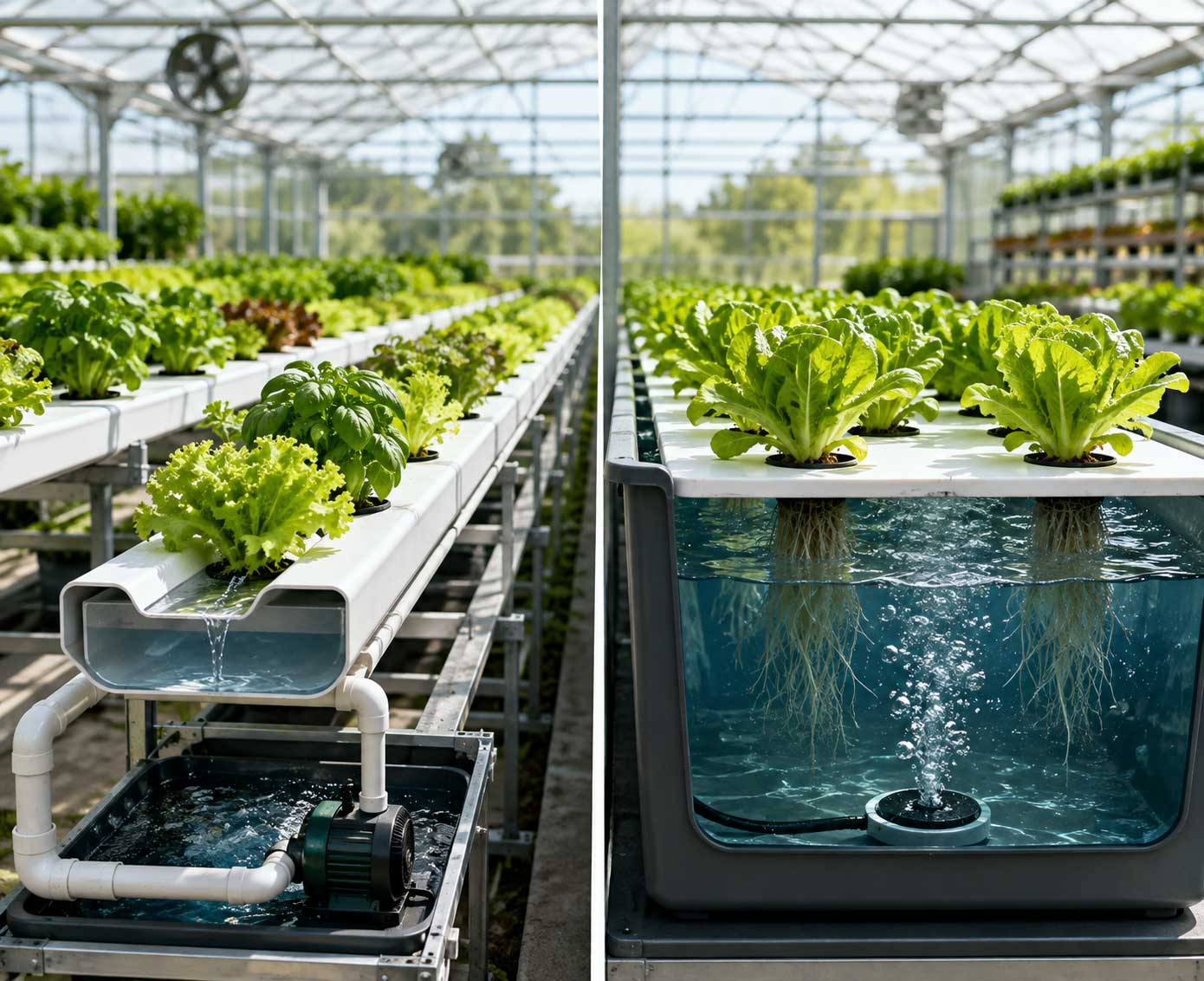
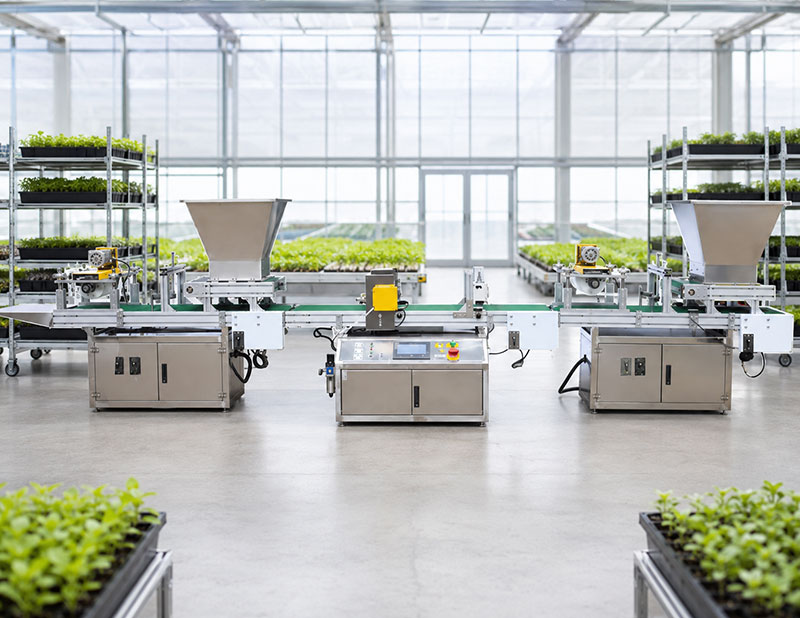
An automatic tray seeder is a seedling production machine that fills trays with substrate, punches holes, places seeds, and covers the seeds in a continuous workflow. For commercial nurseries, greenhouse growers, vegetable seedling producers, flower farms, and hydroponic project suppliers, the right tray seeder can improve sowing speed, reduce labor, improve seed placement accuracy, and support more uniform seedling emergence.
Buying a tray seeder is not only about machine price. Growers should compare capacity, tray compatibility, seed size range, sowing accuracy, substrate handling, control system, after-sales support, and how the machine fits the greenhouse production line. China JY provides Automatic Tray Seeder Machine, Planting Tray, and Horticulture Supplies for professional seedling and greenhouse production.
What Is an Automatic Tray Seeder?
An automatic tray seeder is a mechanized seedling machine designed to sow seeds into plug trays or nursery trays with controlled spacing, depth, and covering. It is mainly used to improve the efficiency and consistency of tray seedling production.
A typical automatic tray seeder includes soil filling, brushing or leveling, hole punching, precision seeding, soil or vermiculite covering, and sometimes watering or conveying sections. China JY’s tray seeder is designed for continuous soil filling, hole punching, seeding, and soil covering. It can process about 380–680 trays per hour and achieve over 98% seeding accuracy, helping growers reduce missing holes, repeated seeding, and uneven emergence.
For greenhouse operations, this matters because seedling quality affects transplant uniformity, crop scheduling, and final production. Compared with hand sowing, automatic seeding can reduce labor dependence, improve batch consistency, and make it easier to manage large orders during peak planting seasons.
Capacity, Tray Size and Seed Types: What to Compare
Capacity, tray size, and seed type are the three most important buying factors because they determine whether the tray seeder can match the grower’s real production volume and crop range. A machine that is fast but incompatible with your trays or seeds will create more problems than value.
| Buying Factor | What to Check | Practical Buying Advice |
|---|
| Capacity | Trays per hour | Match machine capacity to daily seedling orders and labor shifts |
| Tray Size | Outer tray dimensions and cell count | Confirm compatibility before ordering, especially for 50–288 cell trays |
| Seed Type | Small, medium, large, coated, round, irregular seeds | Test real seeds before bulk purchase |
| Seeding Accuracy | Missing rate and double-seeding rate | Look for 98%+ accuracy where possible |
| Substrate Handling | Peat, coco coir, nursery mix, light substrate | Ensure smooth filling and stable hole depth |
| Control System | PLC, touchscreen, parameter memory | Useful for switching between crops and trays |
| Maintenance | Cleaning, nozzle change, spare parts | Choose a machine with accessible parts and supplier support |
JY Planting Tray information shows that seedling trays are commonly made from PS, PVC, or PP, with standard size around 540mm × 280mm and cell counts from 50 to 288 for vegetable seedlings. NCAT’s plug and transplant production guide also notes that plug trays can range from 50 to 800 cells depending on crop type and growing duration.
Seed type matters because lettuce, tomato, pepper, cucumber, cabbage, flower, and herb seeds differ greatly in size and shape. Small seeds may need vacuum precision control, coated seeds may improve singulation, and large seeds may require different nozzles or plates. Buyers should ask the supplier whether the machine can handle the target seed list, not just “vegetable seeds” in general.
How to Match a Tray Seeder to Greenhouse Production
Matching a tray seeder to greenhouse production means connecting machine capacity with tray supply, substrate preparation, germination workflow, greenhouse bench space, and transplant timing. A tray seeder should improve the whole seedling process, not become an isolated machine.
First, estimate daily production demand. If a nursery needs 3,000 trays per day, a machine with 380–680 trays per hour can theoretically complete that volume in one working shift, depending on operator skill, tray loading speed, substrate preparation, and downstream handling. Second, review tray format. A grower using 72-cell trays for tomatoes and 200-cell trays for leafy greens should confirm whether both formats can be set up quickly.
Third, check crop requirements. The University of Minnesota Extension’s starting seeds indoors guide explains that seed depth is often about twice the seed width, while some seeds require light to germinate. This means a good tray seeder should allow adjustable hole depth, seed placement, and covering thickness.
Fourth, consider greenhouse accessories. Seeded trays usually need greenhouse benches, heat mats, humidity control, irrigation, and transport carts. China JY also provides Greenhouse Supplies such as greenhouse benches, fans, films, plant netting, and cultivation tools to support complete greenhouse production.
For buyers building a full seedling line, a seeding station may be more suitable than a single machine. JY’s seeding station includes soil loading, sowing, and soil covering sections, with automatic computer control and adjustable parameters to adapt to different plug trays.
Conclusion
An automatic tray seeder is a practical investment for growers who need faster, more accurate, and more consistent seedling production. The best machine should match your tray size, seed types, daily capacity, substrate, greenhouse workflow, and after-sales requirements. For many commercial nurseries, 380–680 trays per hour and 98%+ seeding accuracy can significantly improve production efficiency compared with manual sowing.
China JY offers automatic tray seeders, planting trays, greenhouse supplies, horticulture supplies, and related seedling production products for vegetable, flower, herb, and nursery growers. Before buying, prepare your tray specifications, crop list, seed samples, expected daily output, substrate type, and production layout so the supplier can recommend the right configuration.
FAQ
1. What is an automatic tray seeder used for?
An automatic tray seeder is used to fill nursery trays, punch seed holes, place seeds accurately, and cover seeds for vegetable, flower, herb, and greenhouse seedling production.
2. What capacity should I choose for a tray seeder?
Choose capacity based on daily tray demand. JY automatic tray seeders can process about 380–680 trays per hour, which is suitable for many commercial greenhouse and nursery operations.
3. What tray sizes can a tray seeder handle?
Tray compatibility depends on machine design. Common seedling trays may use 50–288 cells and a standard size around 540mm × 280mm, but buyers should confirm exact tray dimensions before ordering.
4. Can one tray seeder handle different seed types?
Yes, but compatibility depends on seed size, shape, coating, and machine configuration. Buyers should test real seeds such as lettuce, tomato, pepper, cucumber, flower, and herb seeds before mass production.
5. Why is seeding accuracy important?
High seeding accuracy reduces missing cells, double seeding, uneven emergence, seed waste, and labor needed for correction. For commercial production, accuracy directly affects seedling uniformity and order quality.

 English